Safety & Wellbeing
The difference between surprises and secrets
By Raising Noble ·
Children love a surprise.
The whispered plans for a birthday, the card hidden under a pillow, the present wrapped and waiting. Part of the joy is the moment everyone finds out.
An unsafe secret feels very different. An unsafe secret is something a child is told never to share, even when keeping the secret makes them feel uncomfortable, worried or confused.
Helping children notice that difference is one of the most useful conversations we can share with them.
Listening to the feeling
Children often notice a feeling in their body before they have the words to explain it. A surprise might feel fizzy and exciting. An unsafe secret may sit heavily, or leave them feeling uneasy.
You can practise noticing these feelings together with a simple question: “How do you think you might feel if someone asked you to keep this secret?” Keep the examples everyday and reassuring.
Some families find one clear rule helps: children can always tell their parents or carers anything, even if someone has told them not to. This lifts the weight from the child. They do not need to decide whether something is serious enough to share. They can simply come and talk to you.
If the first adult does not listen
Let your child know that if an adult does not listen, they can keep telling until someone does. Sometimes an adult is distracted or does not understand the first time, and that is all right. Your child can tell another trusted adult.
Together, make a short list of people your child knows they can approach, and talk about how to find them.
If your child tells you something difficult, stay as calm as you can. Listen without blame, let them know they have done the right thing by telling you, and reassure them that what happened is not their fault. Take what they say seriously.
In Australia, Kids Helpline is available on 1800 55 1800 and 1800RESPECT on 1800 737 732. In an emergency, call 000.
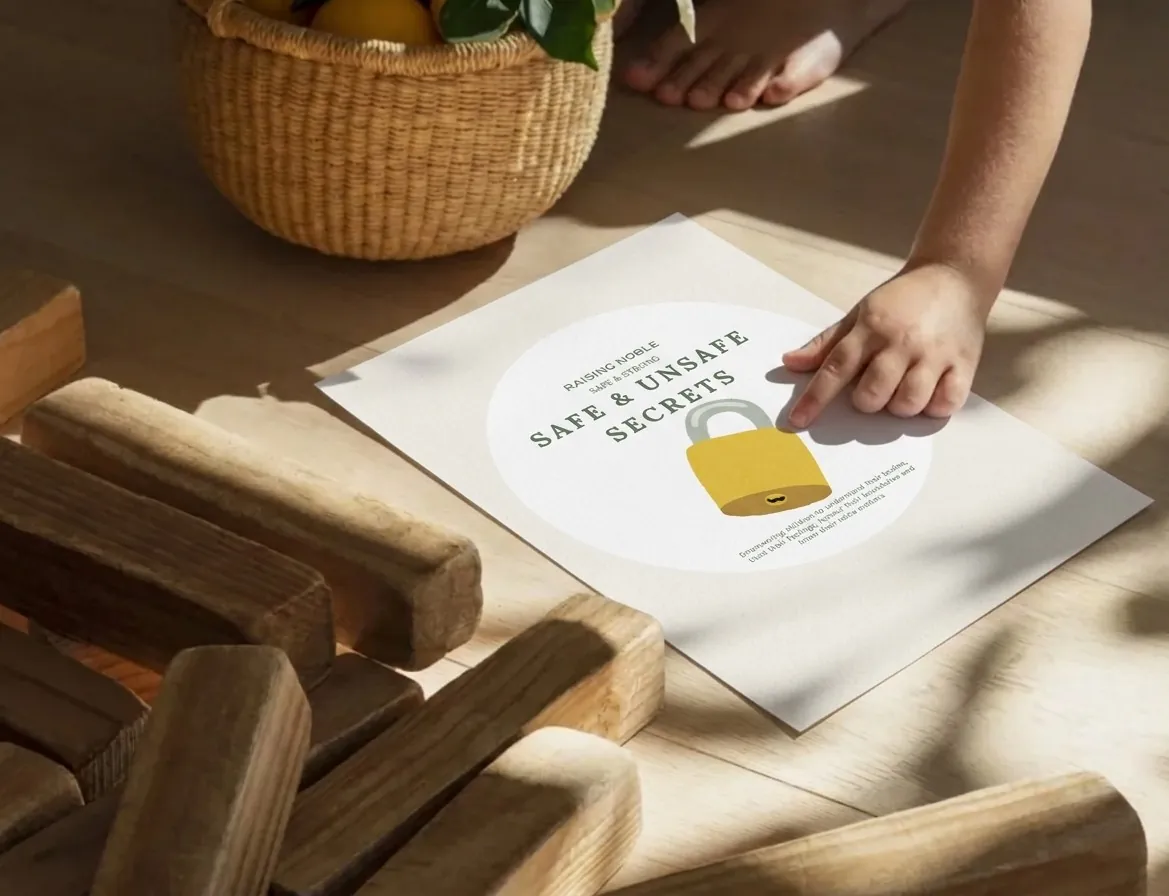
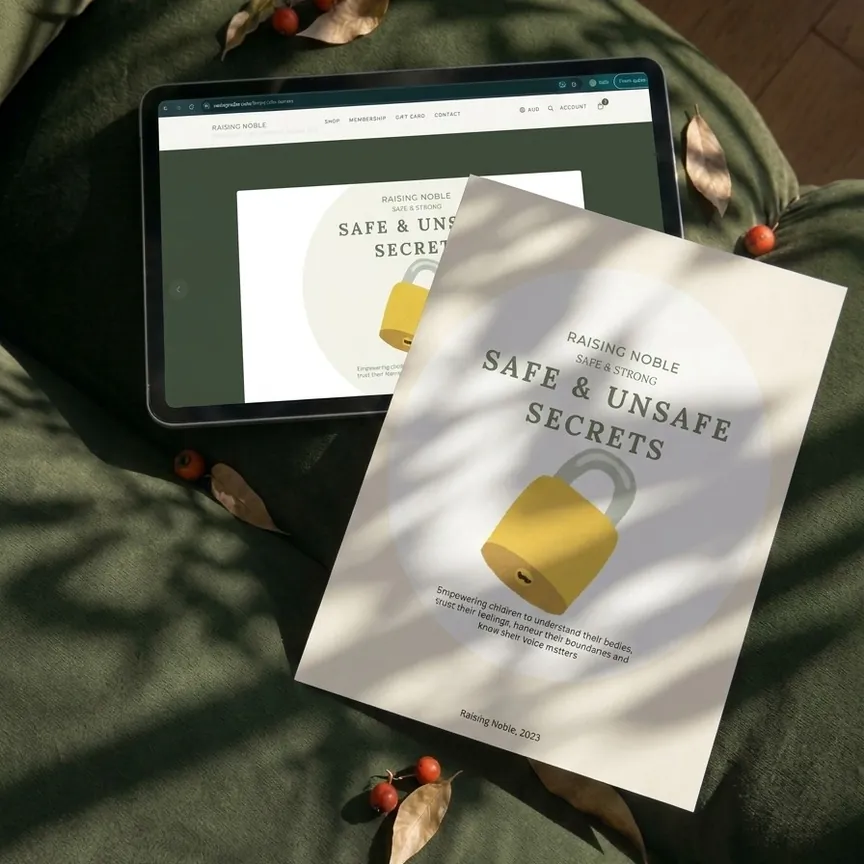
Our Safe vs Unsafe Secrets Kit explores these ideas through a child-friendly presentation, a Parent & Carer Guide and two printable activities, for children aged four and up. You may also like “On body safety and consent”.
With curiosity,
Raising Noble
This article is general information to support family conversations. It is not medical, legal or professional advice.