Safety & Wellbeing
On body safety and consent
By Raising Noble ·
Body safety does not need to be one big conversation.
More often, it lives in the small moments: bath time, getting dressed, a game of tickles that ends when someone says stop. These everyday moments are where children begin to learn that their body belongs to them, and that they can speak up when something does not feel right.
You can begin early, adding ideas gradually as they come up.
Using the correct names for body parts is a simple place to start. Correct names give children clear language to describe their bodies and to ask for help when they need to, and show them that every part of the body can be spoken about without embarrassment. Use these words in the same matter-of-fact way you would talk about an elbow or a knee.
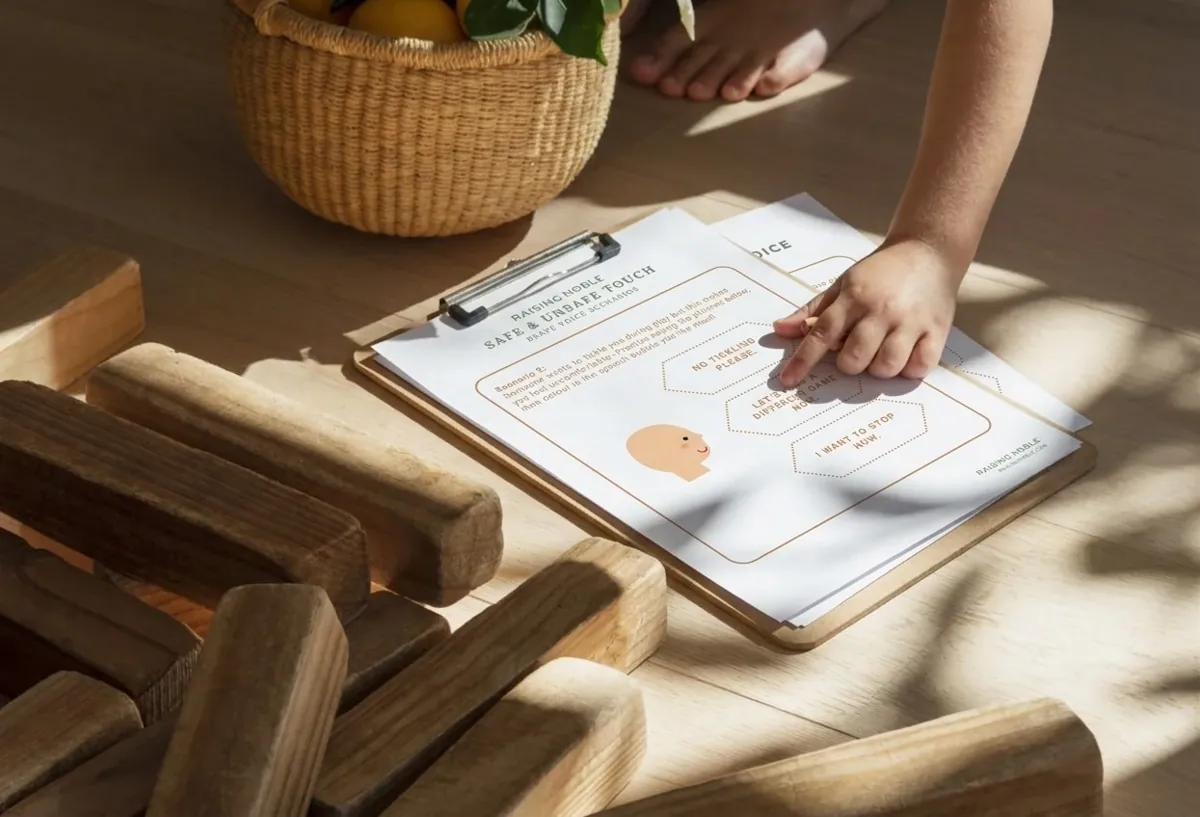
Safe, unsafe and confusing touch
You can introduce three simple ideas. A touch that feels comfortable and respects a child’s boundaries may be safe. A touch that hurts, frightens them or breaks their body-safety rules is unsafe. And if they are unsure how to describe a touch, they can call it confusing.
Make sure your child knows they can always tell you about something that feels uncomfortable or confusing. Their body belongs to them, with family, friends and every other adult.
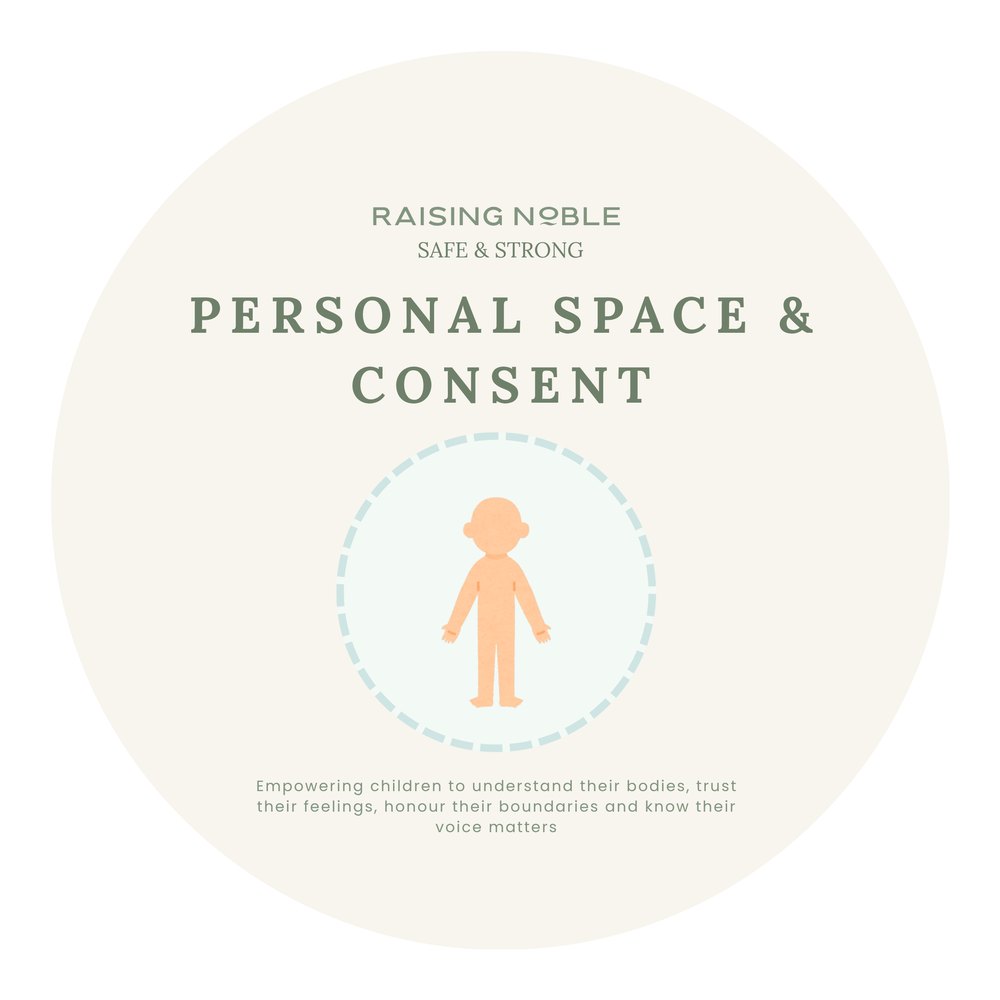
Consent grows from the same small moments. Ask before giving a hug, stop a tickling game when someone says stop, and respect a friend’s no. Children do not have to give hugs, even to relatives. A wave, a high five or a smile can be just as warm a way to say hello. Our Personal Space & Body Consent Kit uses the idea of a personal bubble to help children understand boundaries.
A small circle of trusted adults
Together with your child, name a few trusted adults they can talk to if something worries them. Aim for several people, so there is always someone else to approach if the first is unavailable or does not listen. Talk about how your child knows each person and how they could reach them, and keep the list somewhere easy to revisit.
If your child tells you something difficult, listen calmly, take them seriously and reassure them they did the right thing by telling you. In Australia, Kids Helpline is 1800 55 1800. In an emergency, call 000.
Our Safe vs Unsafe Touch Kit explores body-safety language, boundaries and a trusted-adult network in a clear, age-appropriate way. Related reading: “The difference between surprises and secrets”.
With curiosity,
Raising Noble
This article is general information to support family conversations. It is not medical, legal or professional advice.