Safety & Wellbeing
Navigating a calm plan for when children get lost
By Raising Noble ·
Most of us know the feeling. You turn to look at something on a shelf, and when you turn back, your child is not quite where you left them.
Usually it lasts only a moment. Still, there is reassurance in knowing your child has a simple plan of their own, practised long before the plan is ever needed.
The calmest time to talk about getting lost is when nobody is lost at all. Introducing the steps during ordinary outings gives children time to become familiar with them, without any worry attached.
Keep the plan short. Young children do not need to remember lots of instructions at once.
Three things to practise
Stop and stay. If your child cannot see you, staying in one place makes it easier for you to retrace your steps and find them. You might ask, at home or while you are out, “What would you do if you couldn’t see me?” and help them remember the first step: stop and stay.
Ask a safe person for help. Talk together about who they could approach. Depending on the setting, this might be:
- A staff member wearing a uniform or name badge.
- Someone working behind a counter or at an information desk.
- A parent or carer who is with children.
Know a few details. It helps for a child to know their full name, your name and a phone number they can share with someone helping them. Say the number together until it feels familiar. For younger children, you may also like to keep your number somewhere easy to reach, such as inside a pocket or on a wristband.
How can you rehearse the plan calmly?
On a quiet visit to a shopping centre or another familiar place, point out an information desk or a staffed counter, and talk through who your child could approach. Practise what they might say and how they could share your number.
Keep the conversation light and matter-of-fact. You are helping your child practise a practical skill, just as you would when learning to cross a road.
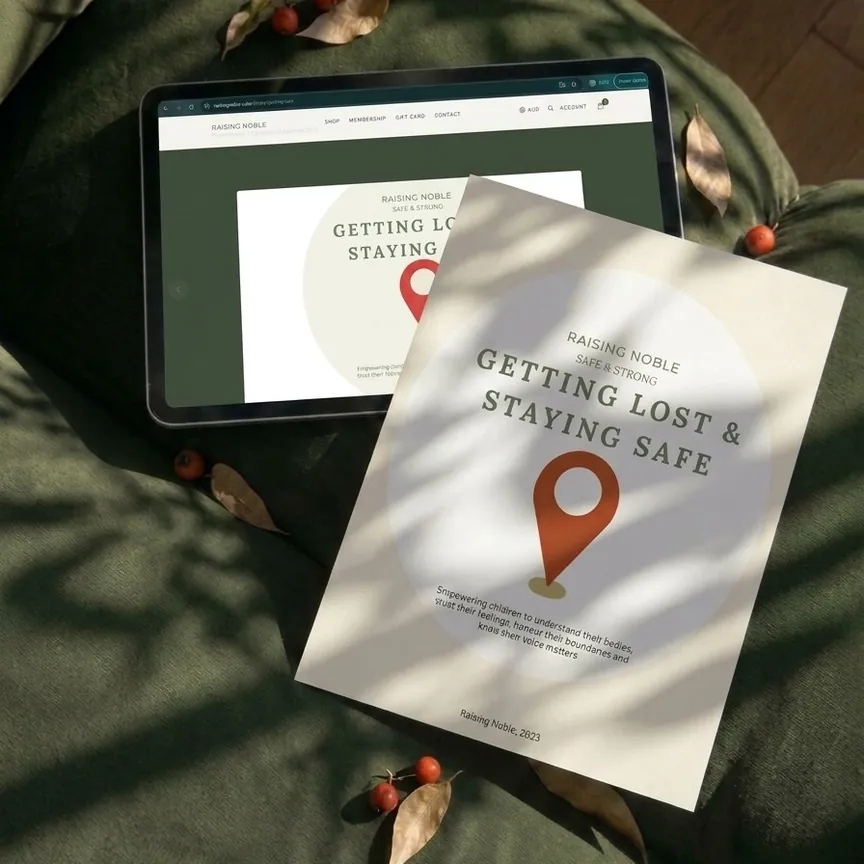
Our Getting Lost & Staying Safe Kit helps families talk through a simple plan, with a Parent & Carer Guide and printable activities for children aged three and up.
Related reading: “The difference between surprises and secrets” and “On body safety and consent”.
With curiosity,
Raising Noble
This article is general information to support family conversations. It is not medical, legal or professional advice.